The Collaboration Frequency: How Co-Creating Amplifies Your Vibe and Your Reach
Going solo might feel safe, but the creators who grow fastest are the ones brave enough to blend their energy with someone else's. Here's how co-creation becomes your most powerful growth strategy.

There's a moment every creator hits — the content is good, the vibe is consistent, but the growth feels like pushing a boulder uphill alone. What if the missing ingredient wasn't better strategy or more posting frequency, but simply another voice in the room?
Why Co-Creation Is a Growth Multiplier, Not a Shortcut
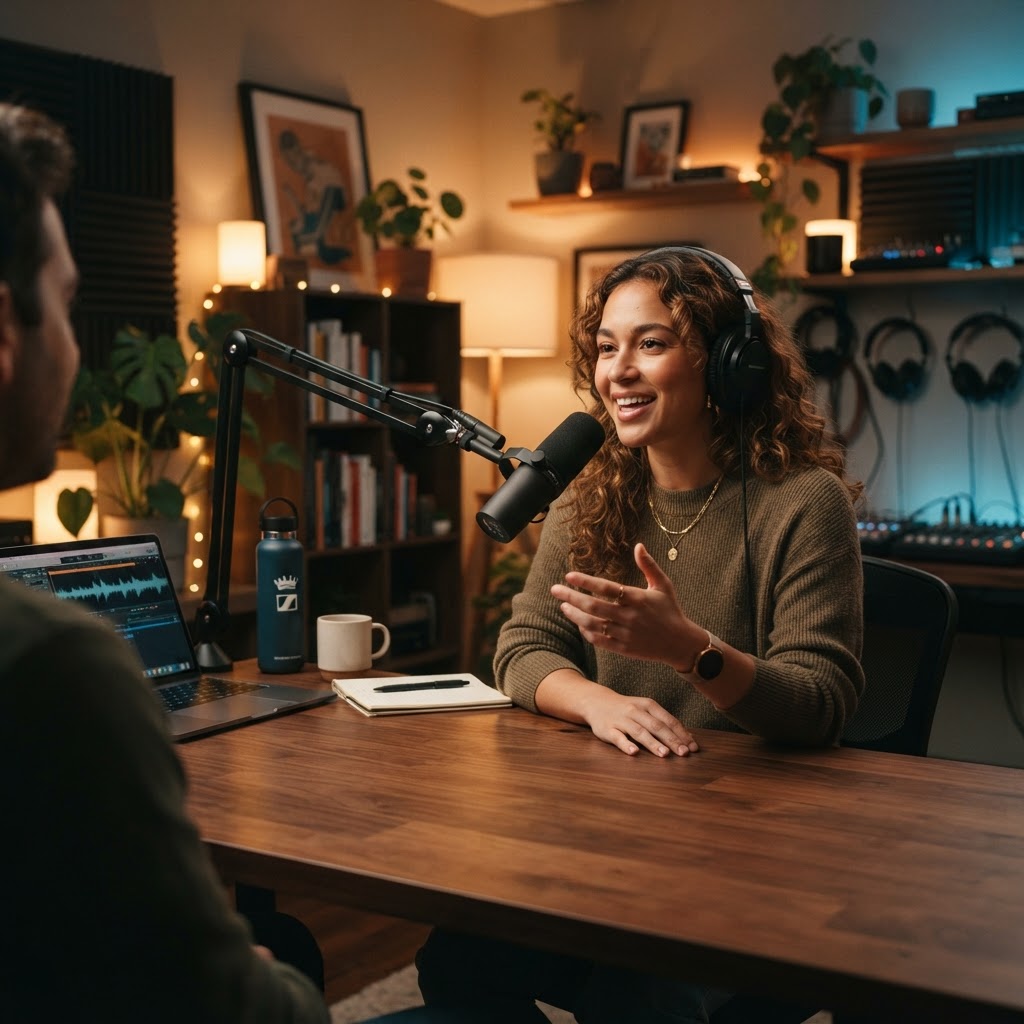
Collaboration gets dismissed as a trend tactic — a quick audience swap with no staying power. But when two creators with genuinely aligned energy build something together, they don't just share followers. They create a third vibe — something neither could produce independently. That emergent energy is what audiences remember and return to. Think about how podcast duos consistently outperform solo hosts in retention, or how creative writing challenges with co-authors generate far more engagement than individual entries. The math isn't just additive. It's exponential when the frequencies match.
How to Find Creators Whose Vibe Complements Yours
The biggest co-creation mistake is chasing numbers instead of resonance. A collaborator with twice your following but a mismatched vibe will feel hollow to both audiences — and they'll sense it instantly. Instead, look for:
- Complementary energy, not identical content. A visual storyteller pairs brilliantly with a wordy, emotionally-driven creator. One builds the world; the other narrates it.
- Shared values, different strengths. You both care about authenticity and creative risk, but they're great at structure while you lead with raw feeling.
- Mutual curiosity. The best collaborations happen when both people are genuinely interested in what the other creates — not just in the exposure.
On VibSocial, use vibe-based spaces to identify creators who consistently show up in the same mood-driven communities as you. Someone who keeps appearing in the same late-night reflective space or energetic momentum channel is already broadcasting on a similar frequency.
Structuring a Collaboration That Actually Delivers
Great creative chemistry without a clear structure often collapses before it launches. Define these before you begin:
What's the shared output? A joint challenge entry, a co-hosted vibe room, a serialized piece of content — be specific. Vague collaborations produce vague results.
Who owns what creatively? Decide upfront who drives the concept, who handles execution, and how final decisions get made. This prevents the slow resentment that kills creative partnerships.
What does success look like for both of you? One creator might want reach. The other might want depth of engagement or a new audience segment. Knowing this early keeps both parties genuinely invested.
A simple one-page creative brief — even in a shared note — transforms a casual collab idea into something both creators can commit to with real energy.
The Cross-Pollination Effect on Community Building
When two creators collaborate publicly, their communities don't just observe — they begin to merge at the edges. Long-time followers of each creator become curious about the other world they're seeing. New people discover both creators simultaneously through the shared work. This is the cross-pollination effect, and it's one of the fastest organic community-building mechanisms available to creators today.
The key is making the collaboration feel like an event, not just another piece of content. Tease it across your individual spaces beforehand. Let your audience in on the process — share a behind-the-scenes moment, a disagreement you worked through, a creative decision that surprised you both. Process transparency turns a collab into a story, and stories build community far more powerfully than polished output alone.
Sustaining the Creative Relationship Beyond One Project
The creators who benefit most from collaboration treat it as a long-term relationship strategy, not a one-off. After your first project together, take time to genuinely debrief: what worked energetically, what felt forced, where the magic was strongest. This honest reflection is what separates a forgettable collab from the beginning of a creative alliance.
Consider building a recurring format — a monthly co-created challenge, a seasonal vibe series, a standing creative conversation your audiences can follow over time. Recurring collaboration trains your audience to anticipate something, which is one of the most powerful loyalty mechanics in the creator economy.
The creators building the most resilient communities right now aren't the ones working hardest in isolation. They're the ones who understood early that your vibe gets stronger when it resonates with another. Find your frequency match, build something real together, and watch what happens when two energies become one signal.